Ryan McGuckin spent years chasing music before realizing literature was the song he wanted to hear on repeat.
By Alex Gluth
Walk into Ryan McGuckin’s office and you’re immediately sorting contradictions. Cyndi Lauper beside Def Leppard. Books stacked floor to ceiling. Jazz drifting under the low hum of hallway conversation. McGuckin is an English professor here at App State, but his office reads more like a record store annexed to a library, which is, more or less, his point.
His scholarly home is Romanticism, an era obsessed with the individual, with art as a way of knowing the world, but he’ll be quick to tell you he’s more interested in where that tradition breaks down and bleeds into other things. On his desk is a Narnia box set, multiple copies of The Odyssey, and a well-marked copy of Kazuo Ishiguro’s The Unconsoled, a novel about a concert pianist who can’t stop being interrupted, which McGuckin has been writing about and finds instructive. “Hardship,” he’ll say before the interview is over, “should never define us, but guide us to growth.” He means it. Read below for more hard-won wisdom.
AG: What do you prefer — Romanticism or Naturalism?
RM: Oh wow, these are great questions! I know this is the first one. Do you mean within the space of literary text or the sort of ideals?
AG: Yeah, text you taught or maybe prefer yourself?
RM: If I was allowed, I’d want a third option. We know Naturalism is a world that is uncaring to human matters. Romanticism I love a lot because it does almost the opposite. It’s about the individual through art and imagination and how the environment fosters them. The reason why I find myself interested in a third option is where they blend — both in a social context or otherwise. Maybe instead of not wanting to pick either, then how about both? I probably should have said, to give a five-second answer, both!
AG: You’re more of an expert here than I am, so I’m all about detail.
RM: It’s true, but you also have to eat dinner today! But now I’m thinking of my reading list and all the things I want to get to. That was a really good question, I wonder what the second will be?
AG: What do you think is the best movie adaptation of a classic novel, or is there one that doesn’t have a film adaptation you want to see?
RM: Kazuo Ishiguro’s most difficult novel, The Unconsoled, which I’ve been writing about. It’s his longest novel — a novel of constant disruption. The plot is this world-renowned concert pianist who keeps getting disrupted by fans, by his managers, by people trying to organize his concert. It’s supposed to be some kind of saving grace to the city. Everything goes wrong to an absurd, comic effect, while also revealing that people know this protagonist on a personal level and it seems like he has an actual life, but he doesn’t remember it. Ishiguro says in interviews he doesn’t have amnesia; the point is to show what happens to all of us over a long span of time, squeezed into a few days. It’s more relatable now because we have technology at our disposal all the time to remind us of everything.
AG: Yeah, I think that would be a good read given how prominent technology and AI are. And how long have you been teaching at App?
RM: Since the fall of 2020.
AG: And have you been teaching the same classes or adapted to add more or less?
RM: It’s a bit of both. I teach a mixture of general ed and majors courses, usually at the 3000 level. The main courses — I help with 2001 cross-curriculum courses but primarily at this point have been teaching American Literature in the Arts. Also, Studies in American Literature, and I find that a little funny because all the projects I have and have published on are in British modernism. For all those courses, I try to keep it within the level they teach, but approach them as a special topics course to allow students to chase a particular question. It also enables the blending of multiple areas of study. I hope in the future to teach in other areas like Women in Literature, things in the Modernist period, and even involving sound and music.
AG: That leads perfectly into my next question — what inspired you to teach literature and fiction? You said you’d like to teach music. Would you want to merge the two?
RM: If I was a vampire and had immortality, I would go back and finish graduate-level work in Music Theory and become a professor. There’s something so rewarding about the rigor and technical precision of studying theory and demonstrating the relationships. Performing something is very hard to replicate in anything else. Since music seemed to involve the totality of life, but literature seemed to speak about it, I began to wonder if there was a way I could find a middle ground. I started seeing that music was a very important metaphorical site in literature — but also a subject matter or plot detail. Music exists in literature in so many iterations: the concept of sound, rhythm especially in poetry. There’s got to be a way to find common ground, and it has been discussed, but it’s not necessarily a main topic of discussion in literary studies anyway. So it gets to be a niche thing I get to do, with space to explore, without it being a crowded field or having no basis for discussion.
AG: So the realization of one and the other would be the inspiration for how you ended up in literature?
RM: Sometimes I wish I could go back in time and remind myself to appreciate what I had more. The experience of creating music and the vibratory realities of that — there’s nothing like it. We had this amazing experience, but I thought, why are we going to — as a whole — meeting up afterwards to break this down, talk about it, and analyze it? What I do now seems so much more connected. It’s been an interesting journey, and I think this is the pathway that will get me to where I was sensing something was missing all those years ago. No one tells you, there’s no book, but you just sense something.
AG: I enjoy getting to pick professors’ brains about their experiences of being a teacher and how they got there, but also the advice and tidbits of wisdom I pick up as a college student still in the process of learning. What happens between now and five years in the future?
RM: When I was 20, I remember sitting in one of my literature courses and thinking, I can’t believe this professor gets paid to walk into this room with a book and talk about ideas! It absolutely blew me away, and I realized this is exactly what I want to do. The thing I wanted to do first had not changed.
AG: Is there a professor or course from your own studies — or someone you’ve encountered — that you would attribute your passion for literature and teaching?
RM: Like a mentor?
AG: Yeah!
RM: When I was in graduate school, there were several different talks that the program gave about the important tenets of a good approach to education. And one of those discussions was how many people think about the idea of a mentor or have had a mentor. And it seems as if — while I’m not keen on any of these studies in psychology — it seems to me that having a mentor is incredibly beneficial. And for me, I think I’m really lucky because coming from a classical music space, I grew up since I was a kid always having a mentor, which was usually my private teacher for my instruments. It was about poise and character and how to see through a challenge and remain patient with the idea of failing over and over again. It’s hard to pick because there are so many, which I feel is a pretty lucky position to be in.
AG: And last question — this one is a bit out of left field — if given the opportunity to lead a study abroad program, where would you want to go and what would you want to teach while there?
RM: Wow, excellent question. I would want enough time to acquire a little more of the language and history of the space before going. If I’m thinking about it in a more professional sense, probably Paris. Do a course on the intermedial space the arts present. Whether I care about it connecting to my career or not, I’ve always wanted to travel around Italy, which does feed into literature and music. But I can’t help also thinking about other regions — Germany, Switzerland — these beautiful areas that seem somewhat uninterrupted by modern life, that require a sense of history and place. I think perhaps one of the things I’m chasing is time and memory and how we can experience a space that might look and be almost essentially as it was decades in the past. How can we be connected to the past yet stuck in the present? And what does that mean about art and its way of trying to help us access and acknowledge that? I’m not a philosopher, but that really is a phenomenological question, so it sounds like I’m going to need a big budget.
AG: They’re all good choices! It’s difficult to pick — there are so many places offered.
RM: When you’re studying something and also in its environment, I don’t think there’s anything that can replicate it, even if you have a 20K TV screen. Sometimes going somewhere different, strange enough, clears your mind into realizing the things you always knew but didn’t know how to bring to your consciousness. Yeah, that’s a very good question — I was getting ready for a frog question!
AG: No, that’s next week!
RM: Each interview is in some way weighed the same, but some might take twenty minutes or two hours, and I appreciate you spending this extra time. I can’t speak for everybody, but I think people taking classes here have a good way of not revealing how stressed they are and how scary it can be — even if you’re excited. Where am I going to be in three years? Am I going to be living close to family and friends? Am I going to be valued in what I’m doing? And these are not small questions. If they aren’t keeping you up, you must have some kind of meditative power. We all should try to appreciate where we are and what we have. All to say: if you’re feeling that way, you’re not alone — but if you focus on the task at hand, you won’t get answers right away. Instead, you’ll get answers that lead you to your next steps, and in a way, learning to rely on that can pull back the extra noise. Life is always a little bit of that.
AG: If a student were to read this and remember to make the most of it right now, it may just be what they need to hear.
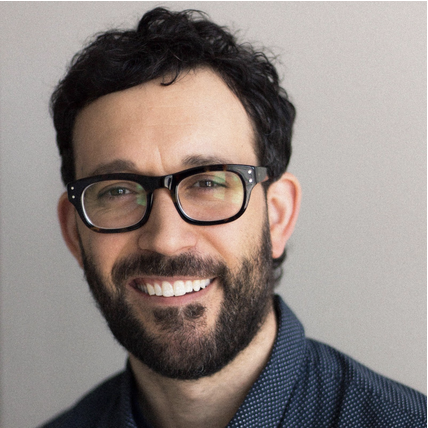
Photo of Ryan McGuckin