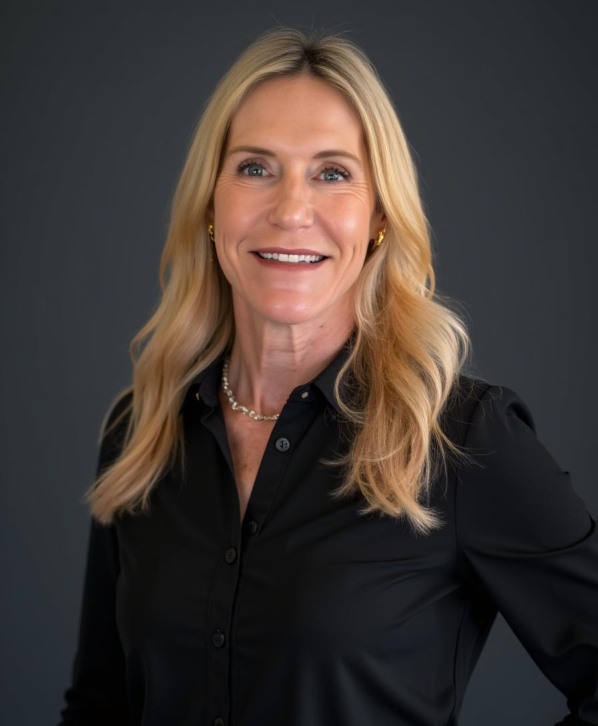
Her love for teaching transcends the classroom and challenges conventions of modern learning.
By: Alex Gluth
Clarice Moran’s path to academia started on the shores of Jacksonville, Florida, which is perhaps why, when given the choice between mountains and beach, she’ll pick the beach every time. The pull of the water isn’t just about salt air or a break from the daily grind; it’s about memory and childhood and the version of herself she found and could be there.
Her career path into academia however, wasn’t as straight as a sandy shore or the horizon line. Before she was shaping the next generation of teachers, she was a journalist covering hard stories in a busy newsroom. The move from writing headlines to writing lesson plans wasn’t a backup plan, but a calling, and that’s why she wants future educators to bring their actual selves into the classroom instead of performing the version of “teacher” they think someone else expects.
In the following interview, I asked Dr. Moran about the messier parts of modern education, like the “no phones in class” debate, and other thorny technology-related issues. She sees the digital landscape clearly. Students may not be lining up to read the so-called classics, but they’re fluent in a language their devices have taught them, and that fluency counts for something, even if it’s not everything. She makes the case for a student-centered classroom built on real connection rather than the standardized buzzwords that tend to dominate conversations about classroom management, which is to say that Dr. Moran isn’t just constantly teaching, she’s constantly rethinking what learning can (and should) look like in the digital age.
AG: Nice and easy, where is your ideal getaway; mountains or beach? If you had to choose?
CM: Oh goodness, my ideal getaway is probably going to be beach just because I live in the mountains and so, I feel that this is home and when I want to get away, I want something that’s different from where I live. I’d go someplace tropical where I could swim, I love the water, sail a little, eat some seafood, and just relax.
AG: Do you have a favorite beach you go to or any place close to the heart?
CM: Yes, well I’m from Jacksonville, Florida. That’s where I was born and grew up, and my parents have a house there and they both recently passed, but we kept the house so I’m able to go and be there. It’s about three blocks from the beach, so I can walk down to the ocean and have that sense of peace and homecoming when I’m at the beach. In terms of a getaway, that’s probably not where I’d go because it's my hometown. I love to go to the Carribean, I think my favorite island is St. John’s. I think it's just a beautiful place and relaxed and that would be my number one choice.
AG: A thousand percent. And the water is always perfect. And then, a lot of teachers will say that they knew early on that they wanted to teach and it was what they were meant to do. Would you say that is true for you or did it take longer to feel more certain?
CM: As I said, I started out as a journalist. I knew I wanted to write in some way so I went to University of Georgia and got my degree in journalism and was actually the editor of the student newspaper at University of Georgia and loved that. After graduation, went to Atlanta and worked at a small suburban paper in Atlanta no longer existing called the Guinnette Daily News in Guinette County and worked there for about three and a half, four years and was on call and sent out. In the newsroom, we had something called the “scanner”, a police scanner. So we’d hear the emergency calls as they came through from 9-1-1 and if it was an address nearby, we would just go. And a call came in of a motorcycle accident and it was really close to the newsroom so my editor at the time just said “go”. I was there before the ambulance, before police and there was a semi-truck that was parked on the curve of a road that you would not have seen if you were coming around the curve. He and his buddy were coming too fast and one of them went around and then he tried to go under the semi-truck and it cut his head off. His buddy was up on the hill in shock and I thought “this is not what I want to be doing”. There was a lot of stress in the newsroom back in those days. A lot of yelling. The way they got us motivated was to scream at us constantly and I thought "I don't want to do it”. Maybe I will just become a novelist because I wanted to write. So I went back to school to get a master’s degree in creative writing and tried to write, but couldn't make a living out of that. While in that program, they asked me to teach a couple of classes. I started teaching and I thought “I love this, this is amazing” and from that point on I knew I wanted to teach. My field is English Education so I actually went on and got another masters to get my teaching license and became a high school teacher before I went into higher ed. I work with people who want to be teachers, so I’m passionate about teaching, but I didn’t start as a teacher.
AG: Very interesting! And I like that App State has The Appalachian. It’s actually interesting that you mentioned you taught high school because I was curious what your stance on the “no phones in class” policy being implemented in secondary education is?
CM: I have a book I edited about cellphones in the classroom and the possibilities of using them in the classroom. I do think there are some positives and I don’t feel great about the fact that they pulled phones out of the classroom completely. I think there is some anecdotal evidence that is coming out now showing that students actually feel happier without their phones and they feel more relaxed. At the same time, people in the real world in a meeting, you have your phone with you. I have mine here, and I have to navigate what my phone is doing and what we’re doing. I think if you take them out of the classroom, students don’t have that practice and we want to prepare them for the real world and that is an aspect of the real world is being able to coexist with your phone and still pay attention. I guess my feelings are mixed on that. I understand why they did it but I also think it's a step too far and I don’t believe that the legislature has a role in telling schools what to do. I wrote an editorial for the newspaper because I was angry about it. I feel like it's an incredible overreach and it's a decision for principals and teachers. I actually got a lot of pushback from that, and people are so rude.
AG: That’s crazy, but that leads really well into my next question about students being prepped and that is, there’s a lot of talk right now about students coming into class without the necessary skills or preparation or drive to get work done. What do you, as a professor, actually see and is it as bad as people say or is it being, not overhyped, but overexaggerated?
CM: I think it is being both overhyped and overexaggerated. I think teachers are doing an amazing job and working really really hard to engage students. They're trying to change their practice and do things in a way that's engaging to students. I think if students are not motivated, it has to do with curriculum and not the teaching. A lot of it is about giving students more choice, more agency, more voice, less top down telling them “This is what we’re going to read today. This is what we’re going to write and this is how you’re going to write it”. I mean, who wants to be told that? Students are a lot smarter than we give them credit for. I also hear people say kids are reading less than ever before, and that’s not true. Kids are actually reading more than ever before because they’re reading on their phones. They may not be reading Huckleberry Finn or To Kill a mockingbird, but they’re reading constantly on their phones and decoding letters and transcribing words. Literacy of that type of medium has actually increased. Their decoding and understanding of “classic”, and I put that in air quotes, “classic novels” is perhaps less, but that's because those classic novels don't apply to their life, they’re irrelevant. I mean, who wants to read stuff by a bunch of dead, straight, white guys?
AG: For students of yours planning to become teachers themselves, what is one piece of advice you would give them that you were given or wish that you had received?
CM: One piece of advice I always give my students is to be your authentic self. To be the person that you are in the classroom rather than something you think you’re supposed to be. Students always ask me about classroom management and discipline, and I always tell them you have to manage students in a way that feels like you. When they go into the classroom and shut the door, they should teach the way they want to teach.
AG: If you redesign one thing about how schools work, not just in your classroom but in the education system as a whole, what would it be?
CM: We talk a lot about student centered classrooms but I don;t think any teacher alive really understands what that means. I’m not even sure I completely understand what that means. A student centered classroom, does that mean the teacher sits at a desk while the students run the show? I'd like to take out the pressure and buzz words and just let teachers teach in a way that feels right for them. When they get in the classroom they are the ones sitting in front of the students. That kid has his head down, and that girl wants to talk to her friend the whole time, and that kid loves to write, they can see their students in front of them. They know best how to reach them, that's what we teach and why they have a professional degree in teaching. You might know English or history or math, doesn’t mean you can teach it. Change out all these buzz words and pressures on teachers and let them be. I think one of the biggest problems with teaching is because it's a female dominated profession, women are frequently told what to do and they are deprofessionalized by the higher ups. By higher ups, I mean legislators who are typically men. The other people who are trying to tell teachers how to be, just like how they tell women how to be. So if teaching was dominated by men, then we wouldn’t be having a lot of these conversations.
AG: Agreed!
Professional Photo of Dr. Clarice Moran