The Making of Modern America – 1945–The Present
Fiction and Film, Poetry and Painting, that defined an era of transformation
English 2360 will concentrate on the ways in which America’s creative artists responded to the dynamic changes in life in the United States following the conclusion of World War II. The emergence of the American nation as the most powerful entity on the planet transformed the course of life for the citizens of the republic, and the cultural phenomena that expressed their thoughts and emotions about this transformation continues to affect life on earth in the 21st century. The intersections of film and fiction, two of the primary components of the creative imagination, will provide a structural approach to the course, while the poetry/music and painting that accompanied, paralleled and expanded the cultural flow will enlarge the concept of a story. In order to explore the evolving sense of what it meant to be an American through the tensions of the Cold War, the progress of the Civil Rights legislation which redressed the inequalities in American society, on through the darkening of life in the later sixties as the war in Vietnam and social unrest engulfed the country, and then into the mid-seventies when the resignation of the President revitalized the spirit of the nation, the stories that established the values and virtues embodied by the characters who endure as avatars of the American Dream will form the foundation of the course.
The experiences of the men and women who served in the war to defend democracy against the existential threat of totalitarianism, and the post-war readjustments that were demanded by a growing awareness of the inequities in traditional cultural patterns of behavior, compelled a reassessment of priorities concerning the place of a citizen in American society. The G. I. Bill, which enabled millions of veterans to become the first in their families to attend college, was responsible for an opening of opportunity unprecedented in American history: however, the Bill did not include all African American G. I.’s, and even after President Harry Truman integrated the armed forces, there was still a considerable disparity in opportunity.
Asynchronous
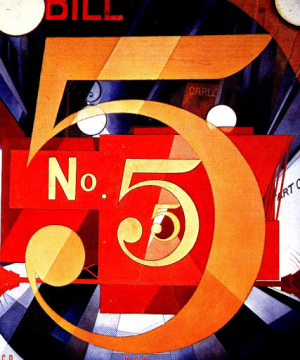
Charles Demuth's 1928 painting "I Saw the Figure 5 in Gold," a large golden number 5 on a red field with beams of light, inspired by William Carlos Williams's poem "The Great Figure."