
Welcome!
If you enjoy studying and creating texts, film, and multimedia compositions, you’ve come to the right department. In our courses, minors, and majors, you will analyze and critically engage many kinds of texts for their craft and meaning in their cultural contexts. Many of our courses involve written, visual, and auditory texts, challenging students to develop 21st century digital literacy skills and exploring new ways to create and seek meaning.
Whether you seek to take courses in our program as a major, minor, or elective, our award-winning faculty members are committed to supporting you. We are active writers and scholars who publish and teach about literature, cinema, memoir, nonfiction, poetry, teacher education, multimodal communication, antiracist pedagogy, digital rhetorics and literature, environmental literature and rhetoric, Appalachian studies, and many other timely topics.
We offer a B.A. program with specializations in Creative Writing, Film Studies, Literary Studies and Professional Writing, a B.S. in English Education, and minors in English and Film Studies. Our graduate program is being redesigned to offer concentrations in Literary Studies, Rhetoric and Composition, and Teaching Literature and Writing.
Our department’s goal is to contribute to students’ success in their professional aspirations. Our graduates frequently teach at the secondary and postsecondary levels, go on to complete graduate degrees, and pursue fruitful careers in creative and technical writing, business, medicine, entertainment, publishing, broadcasting, advertising, journalism, government, and the law.
If you are interested in taking courses, becoming an English major, or doing a minor within our department, you might:
Explore our website for information about our diverse, engaging programs.
Reach out to a program’s director about your interest as a potential major, minor, or student taking elective courses.
Check out our course promos, so you can see how some of the courses are taught.
Discuss your interest in our courses with your academic advisor.
Indigenous Land Acknowledgement
The English Department acknowledges and honors the ᎠᏂᏴᏫᏯ (Cherokee), the yeh is-WAH h’reh (Catawba), and other Indigenous peoples whose ancestral lands we occupy.
Please read our full acknowledgement here.
Our Statement on Diversity
Education is transformative, and open intellectual inquiry is the foundation of a university education and a democratic society. In the spirit of shared humanity and concern for our community and world, the Department of English faculty celebrate diversity as central to our mission and affirm our solidarity with those individuals and groups most at risk. In line with our departmental goals, we disavow all racism, xenophobia, homophobia, sexism, Islamophobia, anti-Semitism, classism, ableism, and hate speech or actions that attempt to silence, threaten, and degrade others.
As educators, we affirm that language and texts, films and stories help us to understand the experiences of others whose lives are different from ours. We value critical reasoning, evidence-based arguments, self-reflection, and the imagination. Building on these capacities, we hope to inspire empathy, social and environmental justice, and an ethical framework for our actions. We advocate for a diverse campus, community, and nation inclusive of racial minorities, women, immigrants, the LGBTQ+ community, and people of all religious faiths.
As part of ongoing efforts to improve our inclusivity, the English Department recently approved the following resolution on the use of the n-word in our classes.
Latest News

Memorial Page for Dr. Edwin T. (Chip) Arnold III is now online
Apr 29, 2024
A memorial page for English Professor Dr. Edwin T. (Chip) Arnold III is now online at Edwin T. (Chip) Arnold Memorial Site (google.com).A Go...
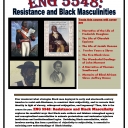
ENG 5448: Resistance and Black Masculinities with Dr. Alonzo Smith
Mar 28, 2024
Course DescriptionEver wondered what strategies Black men deployed in early and nineteenth-century America to resist anti-Blackness, to construct thei...
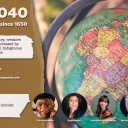
ENG 2040: World Lit Since 1650 (Hickory Campus)
Mar 27, 2024
Course DescriptionThis course serves as an introduction for both English majors and non-majors to the World Literature with a focus on texts created b...
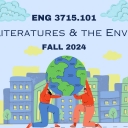
ENG 3715: Latinex Literatures and the Environment
Mar 27, 2024
Course Description The purpose of this course is to provide a literary introduction to the study and intersections of Latinex and Indigenous lite...
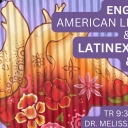
ENG 2360: American Literature and the Arts- Latinex Writers and Artists
Mar 27, 2024
Course DescriptionThe purpose of this course is to provide an introduction to Latinex writers in dialogue with Latinex artists. We will read literary ...
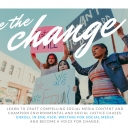
ENG 4100: Writing for Social Media with Dr. Sarah Long
Mar 27, 2024
Course DescriptionDive into the digital age with ENG 4100: Writing for Social Media. This course doesn't just teach you the fundamentals of social med...
ENG 5000: Introduction to Graduate Studies
Mar 27, 2024
Course InformationCourse- ENG 5000: Introduction to Graduate StudiesOffered- M 2:00 - 5:00Professor- Dr. Jill EhnennSemester- Fall 2024Course Descript...
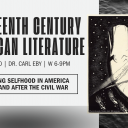
ENG 5780: Nineteenth-Century American Literature - Imagining Selfhood in America Before and After the Civil War
Mar 26, 2024
Course DescriptionThis course will contrast how American writers imagined individual selfhood, autonomy, and agency before and after the Civil War. (I...
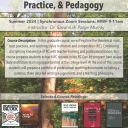
RC 5100:Composition Theory, Practice, & Pedagogy
Mar 26, 2024
Course DescriptionIn this graduate course, we will explore the theoretical roots, best practices, and teaching styles in rhetoric and composition (RC)...